Beyond the app

The app is the smallest part
of what she gets.

You're not signing her up for software. You're giving her the thing almost no young athlete is ever actually taught — how to run her own body well, on purpose, for the rest of her life.

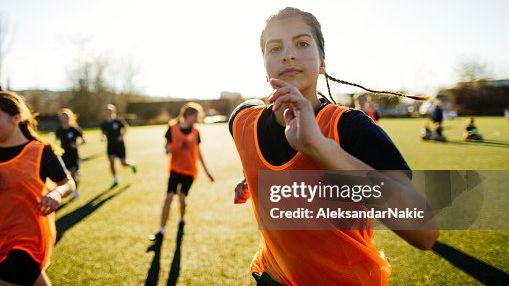
young athlete, composed and in control
The honest version

She will stop playing this sport one day. What she should not lose is the ability to tell the difference between tired, overloaded, and hurt — and to do something about it before somebody else has to.

Without it
  • Push through everything, because that's what tough looks like
  • "I'm fine" is the only available answer
  • Rest feels like falling behind — so it doesn't happen
  • Somebody else decides how hard she goes today
  • Burnout arrives as a surprise, usually mid-season
  • The first real conversation about her body happens in a clinic
With it
  • She knows which days to attack and which to bank
  • She has language for what she's feeling, and evidence behind it
  • Recovery becomes part of the work, not the opposite of it
  • She makes the call — the system just shows her the picture
  • Burnout gets caught in the numbers weeks before it lands
  • She can advocate for herself in a room full of adults
What she's actually learning

Four habits she'll keep long after the season.

None of these are taught in practice. All of them separate athletes who last from athletes who break.

01

Self-knowledge

She learns what her own signals mean — that this kind of sore is adaptation and that kind is a warning. Most adults never learn this. She'll have it at fifteen.

02

Accountability, not policing

Nobody is checking up on her. She logs because she can see what it gives back. That's the difference between a rule she resents and a standard she owns.

03

Balance over go-go-go

Sleep, fuel and recovery stop being the boring stuff and start being visible levers she can pull. She sees her own numbers move when she takes care of herself.

04

Her own voice

Her check-in genuinely changes the plan. She learns early that saying how she actually feels produces a better outcome than pretending — a lesson that outlives sport entirely.

What's actually at stake

One knee injury can cost her
far more than a season.

This is the part nobody puts in the brochure. The numbers on youth ACL injury are bad, and they get worse the longer the injury goes unrecognised.

2–8×
Higher ACL injury rate for girls than boys in the same sport, at the same level.
Widely replicated across youth cohorts
~1 in 3
Never return to their previous level of play after ACL reconstruction.
Return-to-sport literature
9–12 mo
Typical time out — through school, selection windows, and recruiting years.
Standard rehab timeline
$20–50k
Surgery plus rehabilitation, before travel, lost work, and time.
US cost estimates · varies by coverage
Financially
Reconstruction, months of physiotherapy, imaging, travel to appointments, missed work for whoever drives her. Prevention costs a rounding error by comparison.
Emotionally
Identity loss is the part people underestimate. She is separated from her team, her routine, and the thing she is known for — at exactly the age those things matter most. Depression and anxiety are documented after significant youth sports injury.
Physically
A first ACL injury sharply raises the risk of a second, and meaningfully raises the risk of early osteoarthritis in that knee. Post-surgical opioid prescribing in adolescents carries its own documented risk of persistent use. A pain problem can become a much larger problem.

DRAFT — figures shown as ranges pending final citation pass. Every number above needs a linked source before publication.

The quieter cost

And then she stops playing.

Girls leave sport at roughly twice the rate boys do by their mid-teens. Injury is one of the biggest reasons — not only because of the injury itself, but because of what surrounds it: less support, less explanation, and no clear route back.

Girls
Boys

Relative dropout rate by mid-adolescence · DRAFT, citation pending

An athlete who is fit, disciplined, supported, and who has genuine agency over her own training does not fall through the cracks in the same way. She catches things early. She has people who can see what she's carrying. And when something does go wrong, there's a plan — not a void.

Her, in her own words

What it looks like in practice.

Real athletes, real screens, real conversations — drop final photography and video into these frames.

Primary · hero video
doing her prehab, unsupervised
Discipline, on her own
with a parent, phone between them
The conversation it starts
For her

Control, for the first time.

Most of a young athlete's life is decided for her. Coaches set the sessions, schools set the schedule, growth sets the terms. This is one of the few places where she looks at real information about her own body and she decides what to do with it.

1
She stops guessing about her bodyAnd stops being told she's imagining it.
2
Rest stops being a confessionAn easy day is a decision she made, backed by data — not a failure she has to explain.
3
Her effort finally countsThe prehab, the discipline, the honest logging — recorded, and hers to show.
For you

You get to be her parent again.

Not her monitor, not her nag, not the one guessing whether that limp is real. The system carries the watching. You get the relationship back.

1
The nagging endsYou stop asking "did you do your exercises?" — you can just see it.
2
You sleep better on tournament weekendsBecause you know what she went in carrying, and so does her coach.
3
You're raising an adult, not managing a seasonEvery week she takes a little more of it over. That's the actual goal.
Why we built it this way

Young women get the least data
and the most injuries.

Girls tear their ACLs at several times the rate boys do in the same sports. They hit growth spurts that change their mechanics overnight. They carry a monthly physiological cycle that affects load tolerance, and almost no system built for youth sport accounts for any of it.

Meanwhile the tools that do exist were designed for professional men, and the advice she gets is mostly some version of work harder.

So she learns to override her own signals — because nobody ever showed her what they meant, and because stopping looks like weakness. That override is the thing that eventually costs her a season, or a scholarship, or her love of the sport entirely.

We built this to give that back to her. Not to make her train more. To make her the person in the room who knows the most about her own body — and who has the confidence to say so.
Worth saying plainly

The habit is the product.

The daily call, the screens, the numbers — those are the vehicle. What she keeps is knowing how to take care of herself, and expecting to be listened to when she does.